
Chiang Mai Chronicles: A Month of Thai Adventures
- Sep 28, 2023
- 14 min read
Exploring Unforgettable Experimental Moments in Chiang Mai




"The only person who is educated is the one who has learned how to learn….. and change."
Carl Rogers
Carl R. Rogers, a luminary in the realm of humanistic psychology, left an indelible mark with his profound insights into human growth and potential. Among his many pearls of wisdom, one particular quote has taken up residence in my mind, unfazed by the passage of time. It resonates with me deeply, especially when I reflect on the transformative power of education. Rogers' words underscore a fundamental truth: education is a potent force capable of reshaping individuals, often without their conscious consent. This conviction is one I hold dear, as I've witnessed firsthand the remarkable impact education can wield over one's life, choices, and convictions.
Education, though widely acknowledged as crucial, transcends mere textbooks and classrooms; it's a catalyst for profound change. It possesses the power to reshape destinies, to elevate us above the clouds of our own doubts and limitations. When we believe in the possibility of the impossible, we unlock our true potential.
Allow me to share a personal anecdote that vividly illustrates this point. I once believed that becoming an exchange student was an unattainable dream—a notion that lingered like a distant mirage. However, I gradually realized that the key to realizing this dream lay not in the perceived impossibility of the goal, but in my unwavering belief in myself. Education, in its broader sense, not only equips us with knowledge but instills in us the confidence to navigate the seemingly insurmountable. It empowers us to challenge our own limits and rewrite the narratives of our lives. In the grand tapestry of human existence, education stands as a beacon of hope, a transformative force that shapes destinies and illuminates the path to realizing our aspirations. As we embark on our educational journeys, let us remember Rogers' wisdom and embrace the boundless potential within ourselves. After all, believing in the impossible can be the first step toward achieving the extraordinary.

Greetings, I'm Chiara Adellia Chantika, a passionate student pursuing my English Education degree at the esteemed University of Lampung. As I stand here in my second year of college, I find myself in a position beyond my wildest dreams. At the tender age of 20, I have been presented with a once-in-a-lifetime opportunity to study and hone my teaching skills abroad, in the enchanting city of Chiangmai, Thailand.
Teaching and the English language have always been my wellsprings of joy, my North Star in life—second only to my cherished family and my supportive partner. It's almost surreal to think that my journey toward becoming an English teacher has been a defining aspect of my identity since my junior high school days. And here I am today, a testament to the power of self-belief.
I've come to understand that belief in your own abilities can transform the seemingly impossible into reality. Yet, I must express my profound gratitude to the remarkable SEA Teacher program, which has played a pivotal role in my journey. SEA Teacher has not only broadened my horizons but has also imparted invaluable lessons on embracing cultural diversity, spreading positivity, and evolving into a better student teacher.
Through SEA Teacher, I've learned that the world extends far beyond what can be held in the palm of my hand. It's a vast tapestry of cultures, experiences, and opportunities waiting to be explored. As I embark on this exciting chapter of my educational journey, I carry with me the wisdom and insights gained from SEA Teacher, and I am eager to make a positive impact in the lives of those I meet along the way.
My story is a testament to the transformative power of belief, education, and the pursuit of one's passions. As I continue on this incredible path, I look forward to embracing new challenges, embracing diversity, and spreading the joy of learning with boundless enthusiasm.
Before we delve deeper into my journey, allow me to formally introduce you to the remarkable SEA Teacher program.
"In October 2014, the Southeast Asian Ministers of Education through the SEAMEO Council issued seven priority areas for SEAMEO to work together to improve the quality of education in Southeast Asia. “Revitalizing Teacher Education” is one of the priority areas in achieving quality education in the region. To fulfill this mandate, the SEAMEO Secretariat has embarked on a project titled “Pre-Service Student Teacher Exchange in Southeast Asia (SEA-Teacher Project).”
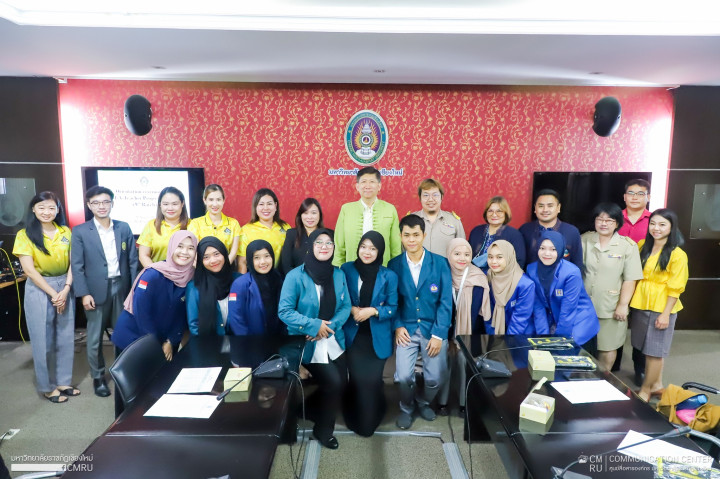
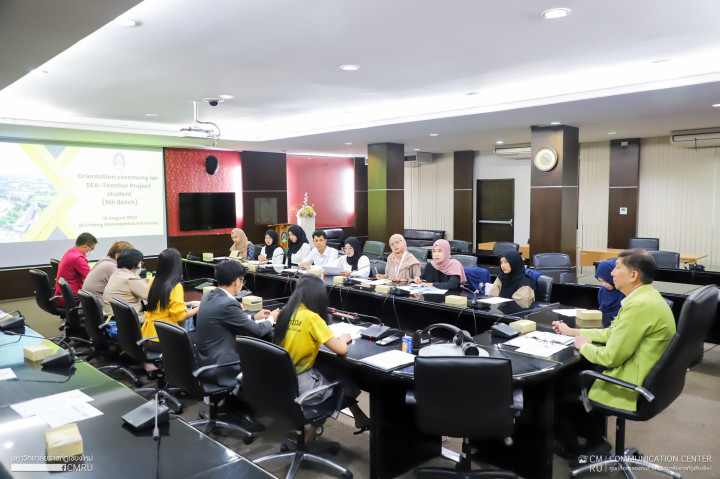
It is with great pride that I introduce myself as one of the student teachers, part of Batch 9 of the prestigious SEA Teacher program for the year 2023.
Moreover, the objectives of the SEA-Teacher Project as are:
To enable pre-service student teachers to develop their teaching skills and pedagogy;
To encourage pre-service student teachers to practice their English skills;
To allow the pre-service student teachers to gain a broader regional and world view;
To expose future teachers to diverse teaching and learning situations and opportunities and the value of flexibility.
Within the framework of the program's objectives, student teachers like myself are entrusted with specific responsibilities each week throughout this month-long journey. This structured approach, designed to nurture our growth as educators, involves distinct phases: Observation in the first week, active participation in Assisting Teaching during the second week, Crafting comprehensive Lesson Plans and taking the Lead in Teaching during the third week, and culminating with a week dedicated to Teaching and Reflection.
This methodology is more than just a sequence; it's a deliberate strategy that allows us to seamlessly apply our acquired knowledge and expertise. It's a dynamic process aimed at refining our skills, enhancing our teaching quality, and ultimately shaping us into more effective educators.
As we embark on this transformative journey, the impact extends far beyond our individual growth. We recognize that we are not merely striving to become better teachers for ourselves but also aspiring to contribute to the educational landscape of our beloved city, Bandar Lampung, Indonesia. Our experiences, insights, and newfound proficiency will be channeled back into our local community, enriching the educational fabric and fostering a brighter future for our students.
In essence, the SEA Teacher program serves as a bridge between theory and practice, equipping us with the tools, experiences, and inspiration needed to become catalysts of positive change in our classrooms and beyond.
"The project is designed mainly for the 3rd or 4th year of pre-service student teachers whose major are in Mathematics, Science, English, and Pre-school to have the opportunity to conduct their practicum within Southeast Asian countries. Since its inception in 2016, the SEA-Teacher Student Exchange Programme had been conducted for 8 batches with the participation of 2,318 pre-service student teachers from 136 teacher colleges and universities in Indonesia, Malaysia, Philippines, Thailand, Vietnam, and Japan."
I am deeply grateful to the SEA Teacher program, not only for the remarkable opportunity it has bestowed upon me but also for its role in forging vital connections. Thanks to SEA Teacher, I have had the privilege of establishing a meaningful relationship with Chiangmai Rajabhat University, which serves as my hosting institution. Additionally, I am profoundly appreciative of Wattanothai Payap School in Chiangmai, Thailand, for warmly welcoming me into their academic fold.
These institutions have not only accepted me but have also provided a vibrant and comfortable working environment—an invaluable support system for an undergraduate student teacher like myself. My heart brims with gratitude toward both SEA Teacher and these esteemed institutions for making this educational journey not only possible but enriching beyond measure.
About the Receiving University:
"Chiang Mai Rajabhat University (CMRU), one of the most prestigious educational institutions in northern Thailand, was founded in 1924. Chiang Mai Rajabhat University (CMRU) is located in Chiang Mai province, widely recognized as the capital of Northern Thailand."
About the Receiving School:
"Wattanothai Payap School operates is government school. The country where Wattanothai Payap School is located is Thailand, while the school is located in Amphoe Mueang Chiang Mai. Bunrueang Rit Road 22, 50200 Amphoe Mueang Chiang Mai, Thailand."


About Wattanothai Payap School
Wattanothai Payap School, the first government girls' school in Chiang Mai Province, was established in 1906 through the efforts of Prince Inthawaroros Suriyawong. Initially founded as a girls' school in Payap Province, it started with 70 students under the leadership of Mrs. Cinnamon. Over time, it changed its name to Satriwattanothaipayap School and relocated to a new site at Wat Si Siat due to limited space. During World War II, it briefly served as lodging for Japanese soldiers and had to relocate again. In 1974, the school ceased admitting male students at the high school level, prompting a name change to "Wattanothaipayap School."
Wattanothai Payap stands out with its robust academic support system, an array of resources, services, and strategies meticulously designed to empower students in their pursuit of academic excellence. Yet, what truly sets this institution apart is its commitment to fostering close, informal relationships between students and teachers.
Here, the concept of shared workspace transcends the conventional. Students have the unique privilege of sharing a working office with their teachers, creating an environment conducive to open dialogue and collaboration. This accessibility grants students unrestricted entry to the teacher's workspace, equipped with computer facilities, printers, and an array of supportive tools. It's a testament to Wattanothai Payap's dedication to facilitating an environment where students can flourish academically.
In line with its overarching mission, Wattanothai Payap International School offers a diverse range of teaching programs tailored to students' individual needs and interests. These programs extend a welcoming embrace to a multitude of preferences, including the English Language Program, Chinese Language Program, Japanese Language Program, German Language Program, French Language Program, and more.
What's remarkable is that each program is thoughtfully structured into distinct levels, ensuring that students receive instruction at a level that suits their proficiency. These programs not only come equipped with their dedicated classrooms but also feature state-of-the-art Language Labs and an array of supportive resources. This comprehensive approach underscores Wattanothai Payap's unwavering commitment to nurturing a well-rounded educational experience tailored to every student's unique journey.
Wattanothai Payap School has a reputation for its inclusive approach to human resources, welcoming a diverse range of teachers. While they prioritize native speakers of certain languages and individuals with strong portfolios for active teaching roles, they maintain an open attitude toward all prospective educators. The school has adopted the International Baccalaureate (IB) program, renowned for its comprehensive educational philosophy, emphasizing critical thinking, creativity, and international-mindedness.
At Wattanothai Payap School, students engage in immersive English language learning through a full-English medium. This approach ensures that students are continuously exposed to English in their daily activities, facilitating their familiarity and practical application of the language. The school places a strong emphasis on teaching and learning English for practical use, equipping students with valuable language skills for real-world communication.
Pedagogical Experiences in Wattanothai Payap
During my first and second weeks of observation and assistance, I had the opportunity to witness the remarkable creativity of the teacher I was working with in establishing an engaging language learning environment. What truly stood out was the teacher's adeptness at crafting interactive lessons and incorporating authentic assessments into his tests. Instead of reinventing the wheel, he judiciously harnessed readily available internet resources, tailoring them to meet the specific requirements of his students, and meticulously fine-tuning them as needed.


My observations underscored the paramount importance of the teacher's deep comprehension of students' individual needs. This insight served as the foundation for his meticulous design of the learning process, ensuring it was precisely aligned with the students' requirements. The teacher primarily employed the communicative language teaching method, enriched by the active integration of educational games and audiovisual resources. This pedagogical approach fostered a dynamic and immersive learning experience, contributing significantly to the students' language acquisition and overall engagement.
Collaborating closely with Mr. James Joseph Leese has afforded me valuable opportunities to enhance my proficiency in sourcing high-quality and suitable learning resources. To meet the diverse needs of his students, Teacher Joseph frequently conducts searches for standardized English language skills tests, tailoring them to align with the specific focus of each week's curriculum.
Teacher Joseph's teaching approach is characterized by a thoughtful emphasis on targeted skill development throughout the week. For instance, Fridays are dedicated to sharpening reading comprehension and vocabulary acquisition skills. Moreover, he has introduced an innovative technique for enhancing students' public speaking abilities through an engaging "Heads Down" game. In this activity, students lower their heads, facing the table, and are selected by the teacher to step forward and present their newly acquired knowledge. This process continues until each student has had the opportunity to contribute, ensuring a comprehensive understanding of the material.
These examples underscore how Teacher Joseph employs authentic assessments to gauge students' abilities effectively. His reliance on internet and online resources serves as a cornerstone for acquiring diverse materials and tests, enriching the learning experience for his students.
Personal Experience in Teaching Preparation
In designing my teaching plan, I have taken into careful consideration the curriculum framework that underpins the educational goals and objectives. The curriculum serves as the guiding structure for what students will learn and how they will acquire the necessary knowledge and skills.
In crafting my teaching plan, I draw inspiration from the renowned International Baccalaureate curriculum framework, which serves as the foundation for our educational journey. This framework meticulously outlines key learning outcomes, subject domains, and grade-level expectations, providing a robust structure for our academic pursuits.
As an educator specializing in English Language instruction, my teaching plan is meticulously tailored to address the unique needs and demands of this discipline. My central objective revolves around equipping students with not just the mechanics of English, but the practical ability to apply it effectively in their daily lives.
My foremost goal is to nurture a profound and holistic understanding of the English language among students. In addition to language proficiency, I place a strong emphasis on cultivating critical thinking and problem-solving skills, empowering students to analyze and address real-world challenges. To bolster effective communication, I am dedicated to enhancing students' public speaking abilities. This includes fostering their confidence and eloquence in articulating their ideas.


Furthermore, my commitment extends to creating an inclusive and diverse classroom environment where each student feels not only welcomed but also valued and respected. This inclusivity promotes an atmosphere conducive to learning and personal growth. My teaching plan, rooted in the International Baccalaureate framework, is geared towards empowering students with a deep and practical command of English. It prioritizes critical thinking, effective communication, and inclusivity, ensuring that our classroom serves as a dynamic platform for both academic excellence and personal development.
Teaching Practice
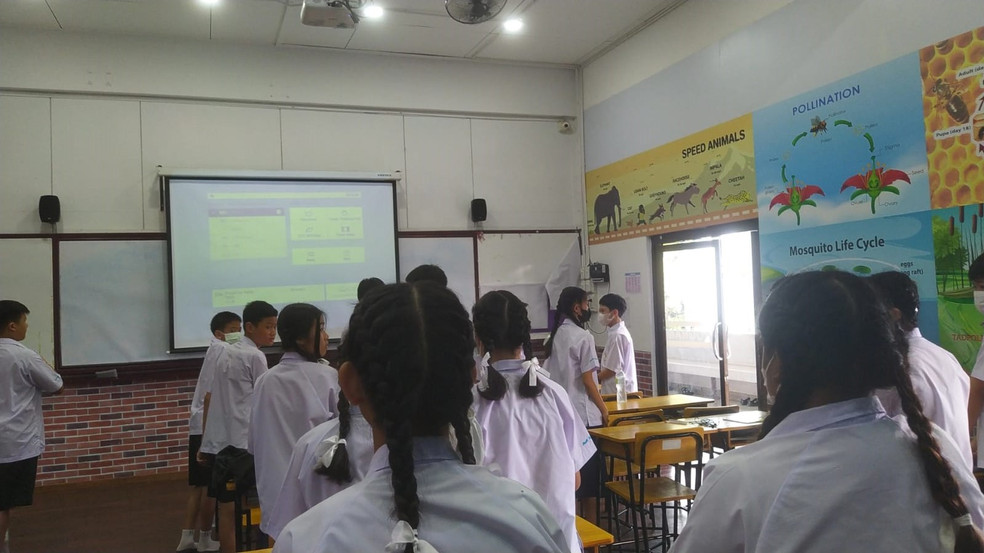
My teaching practice at Wattanothai Payap School has been an invaluable journey that has profoundly influenced my development as an educator. This institution, where I was assigned, extended a warm embrace, fostering an environment where I could flourish without apprehension, fear of rejection, or criticism. The continuous support and genuine smiles from everyone at the school made it feel like a second home, where I could confidently seek assistance without hesitation.
Although I had previous experience as a private tutor in my hometown, teaching in a formal school setting with a larger and more diverse audience was an entirely new and transformative experience. This journey was further enriched by the fact that it unfolded in a foreign country, an opportunity I had never envisioned before, bringing about immense personal growth and good fortune.
I was fortunate to begin my teaching journey in my second week, thanks to the guidance of Mr. Joseph, who believed I was ready for an early introduction to the classroom. In my role within the English Program, my focus was on teaching Junior High School students, specifically those in grades M1 (1st grade), M2 (2nd grade), and M3 (3rd grade).
Over the course of my second and third weeks of teaching, I had the privilege of learning and growing alongside my students. Adhering to the program's procedures, I assumed responsibility for Teacher Joseph's classes, selecting six meetings per week for me to conduct my own lessons on his behalf. To ensure fairness and equal distribution of teaching opportunities, I scheduled one meeting per day, with the exception of two meetings on Tuesdays.
In terms of teaching procedures, I adhered to a structured approach to ensure effective instruction. This involved meticulous lesson planning, which included clear learning objectives, content, teaching methods, and assessment strategies. These well-organized plans facilitated comprehensive coverage of topics while promoting active student engagement through various interactive activities, discussions, and hands-on learning experiences. Formative and summative assessments were employed to evaluate student progress, and timely feedback was provided to support students in enhancing their performance.





Effective time management played a crucial role in maintaining an organized and productive classroom environment. Strict adherence to allocated lesson times ensured the comprehensive coverage of planned content and activities. Smooth transitions between activities and lessons minimized disruptions and maximized valuable learning time. Additionally, thorough preparation of teaching materials in advance and the use of a visual schedule on the board contributed to a structured and efficient daily routine.
An essential aspect of maintaining a positive and conducive learning environment was effective classroom management. This involved setting clear expectations for behavior and academic performance at the beginning of the school year, followed by consistent reinforcement. Positive reinforcement techniques, such as praise and rewards, were employed to motivate students to exhibit good behavior and put forth effort academically. The arrangement of the classroom layout was optimized to enhance student engagement while minimizing distractions.
Throughout my teaching practice, I encountered various challenges, which necessitated problem-solving skills. For instance, when Mr. Joseph was unable to attend school, I swiftly adapted to his absence by seamlessly taking over his responsibilities, ensuring minimal disruption to the students' learning experience. Adapting to unforeseen situations, such as technical issues, unexpected absences, or changes in the curriculum, became part of my routine. Collaboration with fellow teachers and mentors was instrumental in seeking advice and solutions when faced with challenging classroom scenarios. Additionally, regular reflection on my teaching practices enabled me to identify areas for improvement and implement necessary adjustments. I received valuable feedback and suggestions from Teacher Joseph after each teaching session, which aided my professional growth.
Beyond these key areas, I made notable observations and gained valuable experiences. My heightened awareness of the school's cultural diversity prompted me to adapt my teaching methods to respect and incorporate different cultural backgrounds, enriching the overall classroom experience. This teaching practice allowed me to develop professionally, enhancing my pedagogical skills and bolstering my confidence as an educator. Building strong teacher-student relationships emerged as a rewarding aspect of my practice, contributing significantly to a positive classroom environment and bolstering student engagement.
In conclusion, my teaching practice at Wattanothai Payap School has been an enlightening and rewarding experience that allowed me to apply theoretical knowledge in a real-world classroom setting. It provided insights into effective teaching procedures, time management, classroom management, problem-solving, and various aspects of teaching. I am profoundly grateful for the guidance and unwavering support of my mentors and colleagues during this period, which has been instrumental in my growth as an aspiring educator.
Summary, Impression, and Suggestions
During my practicum, the primary purposes were to gain practical teaching experience and apply theoretical knowledge in a real-world classroom setting. It met my needs exceptionally well, as it provided valuable hands-on experience that complemented my academic learning. Therefore, the procedures of the practicum were well-structured and followed a systematic approach. This included detailed lesson planning, differentiation for diverse learners, active student engagement, assessment and feedback, time management, classroom management, and problem-solving strategies.
The practicum yielded several positive outcomes, including:
Enhanced teaching skills and pedagogical knowledge.
Improved classroom management and time management abilities.
Development of strong teacher-student relationships.
Effective problem-solving and adaptability in dynamic classroom situations.
Positive student engagement and learning experiences.
Despite its many benefits, the practicum also presented challenges, such as:
Adapting to unexpected situations, such as technical issues and curriculum changes.
Balancing time effectively to cover all planned content.
Ensuring consistent student behavior and engagement.
Navigating cultural diversity in the classroom.
My overall impression of the practicum experience is exceedingly positive. It served as a holistic and enriching opportunity for me to evolve as an educator, nurturing both my professional and personal growth. The school community, characterized by its warmth and unwavering support, played a pivotal role in shaping this positive experience.
Moreover, the practicum afforded me invaluable opportunities to expand my social network and forge connections with individuals who exuded warmth and hospitality. My month-long stay in a foreign country provided a unique window into cultural differences, profoundly impacting my perspective and instilling in me a newfound appreciation for diversity. This experience has not only broadened my horizons but also deepened my respect for different cultures and backgrounds. It can be concluded that my practicum experience has been a transformative journey that has not only equipped me with the skills and knowledge needed for effective teaching but has also enriched my life by fostering a greater understanding of diversity and cultural appreciation.





To further enhance future practicum experiences, I have identified several areas that have room for improvement. I believe it is essential to provide students with additional support and guidance in handling unforeseen challenges that may arise during their teaching practice. This can include strategies and resources to navigate technical issues, adapt to sudden curriculum changes, or address classroom disruptions effectively.
Encouraging more collaborative teaching experiences and increasing the frequency of feedback from mentors can significantly benefit student teachers. This collaborative approach fosters professional growth and ensures that student teachers receive valuable insights to refine their teaching skills. Additionally, allocating more time for student teachers to interact with their mentor buddies would be beneficial. Moreover, to better prepare student teachers for diverse classrooms, it is essential to implement cultural sensitivity training. This training should focus on enhancing their ability to navigate and embrace cultural differences effectively, ensuring that all students feel valued and respected in the learning environment.
Ongoing self-reflection and self-assessment should be encouraged throughout the practicum. Student teachers should be provided with structured opportunities to reflect on their teaching practices, identify areas for improvement, and set goals for professional growth. This reflective process can be a powerful tool for continuous improvement. Then, to enrich the cultural experience, it would be beneficial to offer student teachers more chances to explore various cultural aspects, such as cuisine, beliefs, and artistic expressions, under the guidance and supervision of the institution's representatives and companions. This immersive approach would allow student teachers to gain a deeper appreciation of the host country's culture.





Comments